

 English
 Español
 Français
 Italiano


- Alaskan Yachts
- Azimut Yachts
- Back Cove Yachts
- Beneteau Yachts
- Benetti Superyachts
- Bertram Yachts
- Boston Whaler
- Broward Yachts
- Buddy Davis Sportfish
- Burger Yachts
- Cabo Yachts
- Catamarans
- Carver Motoryachts
- Center Console
- Chris-Craft Yachts
- Cruisers Yachts
- DeFever Trawlers
- Dufour Sailboats
- Fairline Yachts
- Feadship Yachts
- Ferretti Yachts
- Filippetti Yachts
- Formula Yachts
- Fountaine Pajot Cats
- Grady-White
- Grand Banks Trawlers
- Hargrave Yachts
- Hatteras Yachts
- Hinckley Picnic Boats
- Horizon Yachts
- Hydra-Sports
- Intrepid Boats
- Jarrett Bay Sportfish
- Jeanneau Yachts
- Kadey-Krogen Trawlers
- Lazzara Yachts
- Lekker Boats
- Luhrs Sportfish
- Marlow Yachts
- Maritimo Yachts
- Marquis Yachts
- Mazu Yachts
- McKinna Motoryachts
- Meridian Yachts
- Midnight Express
- MJM Yachts
- Mochi Craft
- Neptunus Motoryachts
- Nordhavn Trawlers
- Nordic Tugs
- Numarine Yachts
- Ocean Alexander Yachts
- Ocean King
- Offshore Yachts
- Outer Reef
- Oyster Sailing Yachts
- Pacific Mariner Yachts
- Palmer Johnson Yachts
Denison’s Alex G. Clarke Speaks at Superyacht Summit in Istanbul

December 12, 2025 4:29 pm
- Share
-

-

-

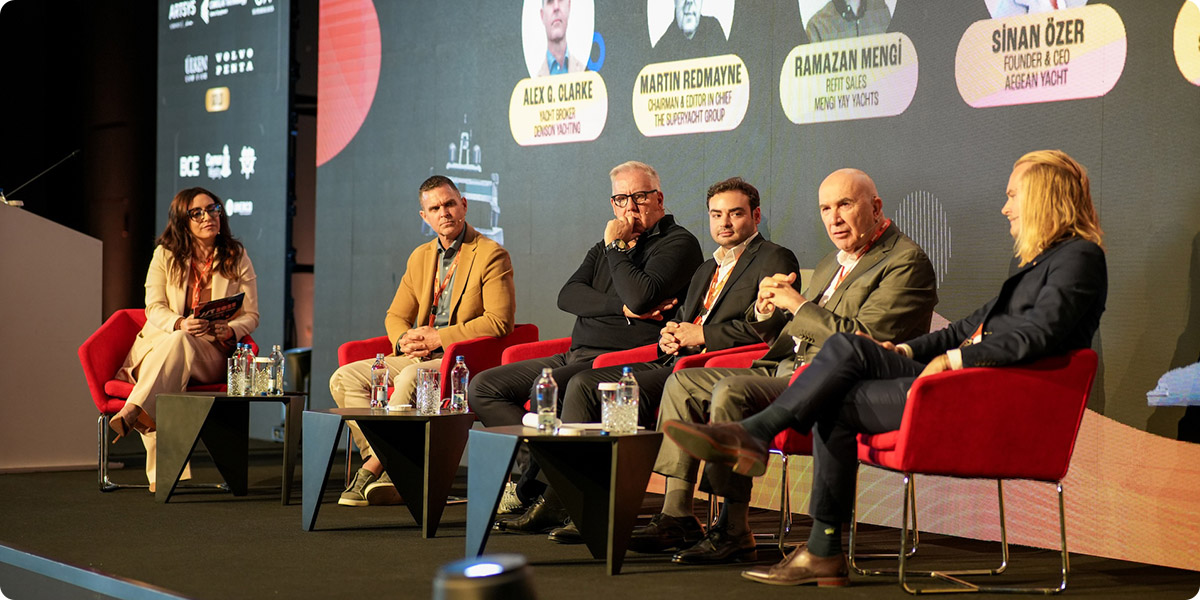
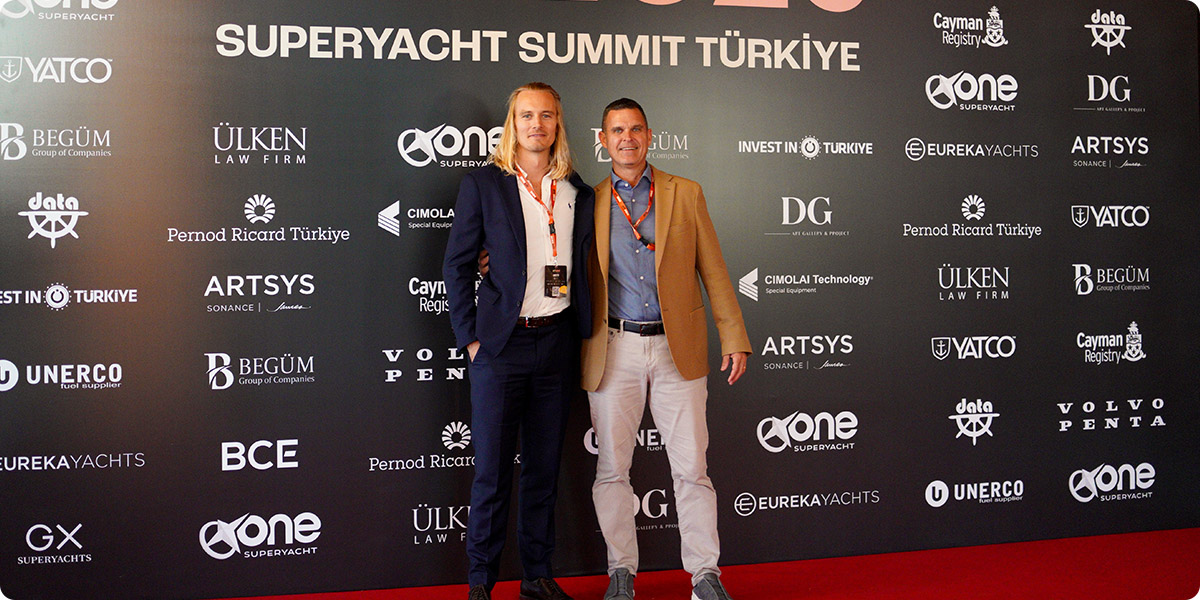
Denison Yachting superyacht broker Alex G. Clarke took center stage at the 3rd Annual Superyacht Summit Türkiye in Istanbul, delivering expert insights on why Turkish shipyards have become the world’s second-largest superyacht builder and what discerning buyers need to know before commissioning their next vessel. The November 2025 summit drew over 450 industry professionals and 31 international speakers to Tersane Istanbul, a 600-year-old shipyard transformed into a premier event venue, for two days of candid discussions about the future of yacht construction, ownership, and investment.
Clarke, who brings more than 15 years of specialized experience in the Turkish yacht market to the Denison team, participated alongside industry luminaries including legendary yacht designer Dickie Bannenberg of Bannenberg & Rowell. This partnership extends far beyond the summit stage.
Turkish Superyacht Builders Earn Global Recognition Through Quality Craftsmanship
During his summit presentations at Tersane Istanbul, Clarke addressed the transformation of Turkey’s superyacht construction reputation. This shift is something he has witnessed firsthand through the delivery of more than 12 new construction projects exceeding 30 meters from Turkish shipyards. “The conversation has fundamentally changed,” Clarke explained to attendees. “A decade ago, Turkey was synonymous with competitive pricing. Today, we’re talking about established brands, world-class craftsmanship, and genuine innovation in yacht design.”
Turkey’s position as the world’s second-largest superyacht builder stems from an extraordinary combination of factors. The country’s maritime heritage stretches back centuries, supported by thousands of kilometers of coastline along the Mediterranean Sea, Aegean Sea, and Black Sea. The workforce maintains artisanal boat-building traditions while embracing modern yacht construction technology. What truly differentiates Turkish yacht production, Clarke emphasized, is diversity. The market offers everything from expedition explorer vessels to sleek high-performance luxury motoryachts.
The roster of established Turkish yacht builders reads like a who’s who of contemporary superyacht construction: Turquoise Yachts (specializing in custom builds 60 meters and above), Numarine (explorer yachts from 22-45 meters), Bilgin Yachts, Mengi Yay (with 56+ years and three generations of shipbuilding expertise), and Dunya Yachts. Each Turkish shipyard has carved out distinct market positioning, allowing buyers to match their specific requirements with a builder whose expertise aligns perfectly with their vision.
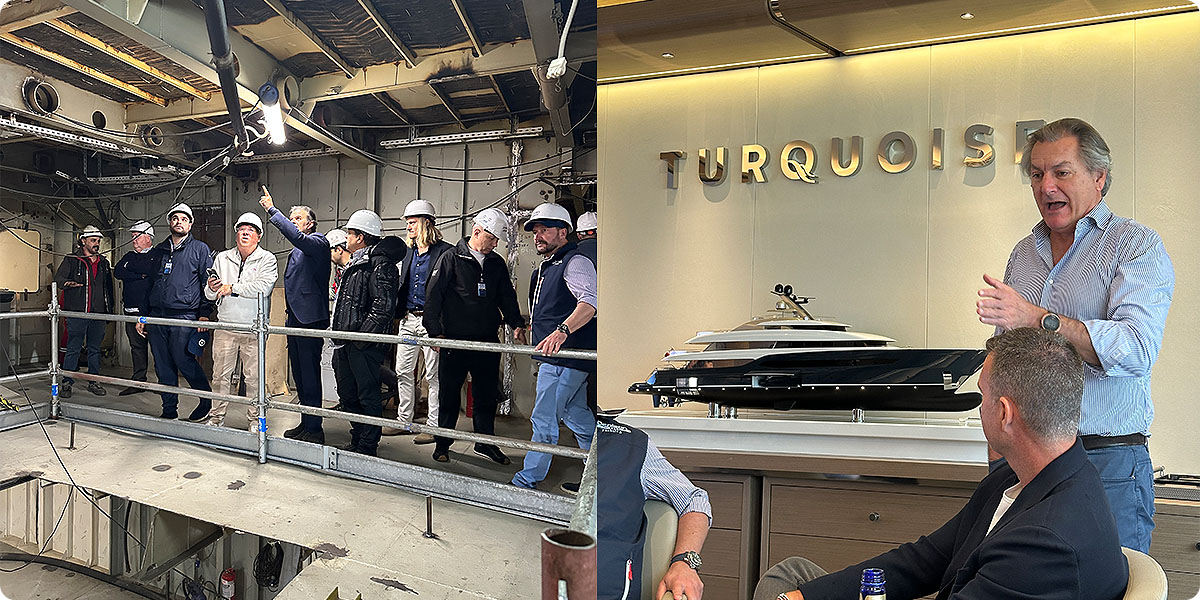 Inside Turkey’s Superyacht Industry: Denison’s Tour of 10 Turkish Shipyards
Exclusive New Construction Projects Showcase Turkish-American Collaboration
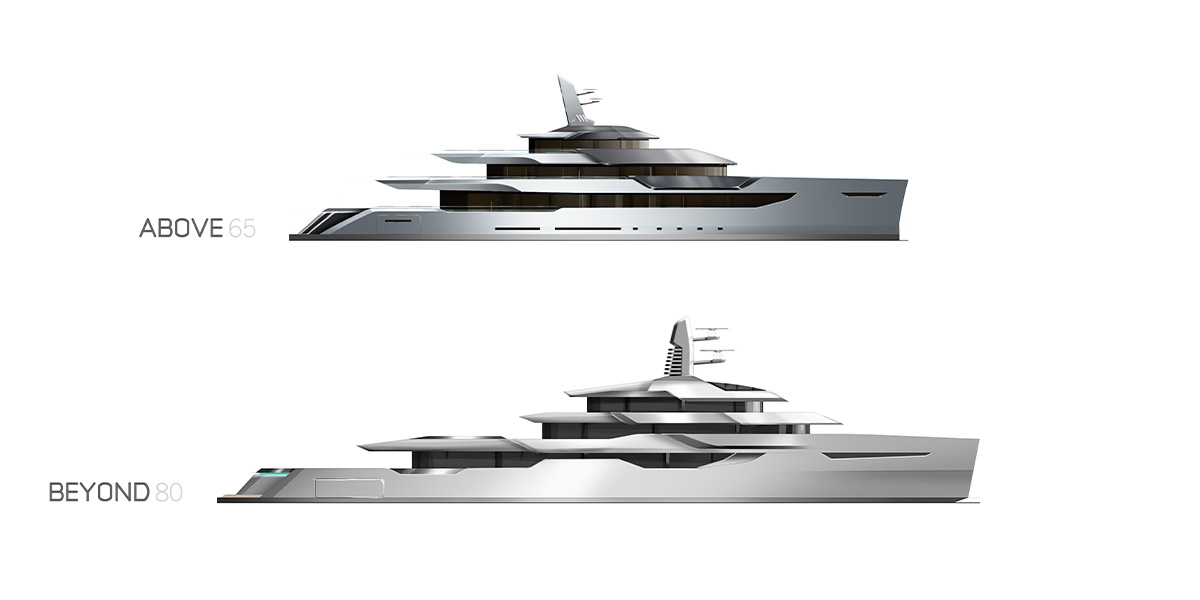
Denison Yachting’s strategic partnerships with Turkish shipyards have produced some of the most exciting new construction projects currently available. Clarke serves as the exclusive broker for the ABOVE & BEYOND series from Turquoise Yachts. These twin explorer concepts are designed by Bannenberg & Rowell and represent the pinnacle of Turkish craftsmanship.
Additionally, Denison holds joint central agency for the 51-meter SPITFIRE, currently under construction at ARES Yachts in Antalya. This Bannenberg & Rowell-designed explorer draws inspiration from the iconic WWII Supermarine Spitfire fighter aircraft, featuring a hybrid diesel-electric propulsion system capable of silent electric cruising. With construction begun in February 2025 and a €32.9 million asking price, SPITFIRE is expected to debut at Monaco Yacht Show 2026.
Navigating Tariffs, Financing, and the Realities of Turkish New Builds
Clarke dedicated significant summit discussion time to practical considerations that American buyers must understand when pursuing Turkish construction. The current tariff environment imposes a 10-20% cost impact on yacht imports to the United States. This is a substantial consideration that requires careful financial planning and sometimes creative structuring of delivery arrangements.
Financing presents additional complexity. Unlike American-built vessels, U.S. banks will not finance Turkish new construction projects, and the lack of bank guarantee programs common in European shipbuilding requires buyers to approach transactions differently. Clarke advises clients to work with experienced maritime attorneys and ensure robust contract protections that account for these structural differences.
Delivery timeline management emerged as another crucial topic. Turkish shipyards operate with different cadences than American buyers sometimes expect, making clear communication, milestone tracking, and realistic scheduling essential for successful projects. After-sales support (the network of service capabilities available once a vessel is delivered) varies significantly between yards and should factor heavily into builder selection decisions.
The Explorer Segment Continues Driving Market Growth
Summit discussions confirmed what Clarke has observed in his brokerage practice: the explorer yacht segment continues experiencing robust demand. Today’s buyers increasingly prioritize range, capability, and versatility over raw speed. They want vessels that can reach remote destinations while maintaining the comfort standards expected aboard modern superyachts.
This trend aligns perfectly with Turkish builders’ strengths. The country’s yards have invested heavily in expedition-capable platforms, with Numarine’s XP series and Turquoise’s explorer designs leading market development. Denison’s exclusive U.S. representation of the Numarine Explorer range (22-45 meters) has resulted in 15+ Numarine sales over recent years, including multiple 26XP and 37XP expedition yachts delivered to American clients.
Understanding Today’s Superyacht Buyer and Tomorrow’s Owner
Clarke shared demographic insights that illuminate current market dynamics. The typical superyacht buyer remains middle-aged with family, often seeking vessels that accommodate multi-generational use while providing the platform for meaningful shared experiences. Private ownership continues trending away from the pure charter model toward personal enjoyment, though well-managed charter programs can offset operational costs.
A significant development on the horizon: the generational wealth transfer currently underway will reshape ownership patterns over the coming decade. Younger inheritors often approach yachting differently than their parents. They have different aesthetic preferences, different usage patterns, and different expectations for technology integration and environmental performance. Forward-thinking buyers and builders are already anticipating these shifts.
The key industry figures Clarke has encountered throughout his Turkish market experience share one defining characteristic: genuine passion for the craft. From third-generation shipyard families to innovative naval architects, the Turkish yachting ecosystem thrives on personal commitment that transcends pure commercial interest. This passion translates directly into the quality of vessels leaving Turkish yards.
Frequently Asked Questions About Turkish Superyacht Construction
Why are Turkish shipyards ranked #2 globally for superyacht construction?
What are the main challenges for American buyers purchasing Turkish-built yachts?
Which Turkish shipyards does Denison Yachting represent?
What makes the ABOVE & BEYOND explorer yachts unique?
How long does Alex G. Clarke have experience in Turkish yacht markets?
Superyacht Summit Türkiye Highlights

Latest News


