

 English
 Español
 Français
 Italiano


- Alaskan Yachts
- Azimut Yachts
- Back Cove Yachts
- Beneteau Yachts
- Benetti Superyachts
- Bertram Yachts
- Boston Whaler
- Broward Yachts
- Buddy Davis Sportfish
- Burger Yachts
- Cabo Yachts
- Catamarans
- Carver Motoryachts
- Center Console
- Chris-Craft Yachts
- Cruisers Yachts
- DeFever Trawlers
- Dufour Sailboats
- Fairline Yachts
- Feadship Yachts
- Ferretti Yachts
- Filippetti Yachts
- Formula Yachts
- Fountaine Pajot Cats
- Grady-White
- Grand Banks Trawlers
- Hargrave Yachts
- Hatteras Yachts
- Hinckley Picnic Boats
- Horizon Yachts
- Hydra-Sports
- Intrepid Boats
- Jarrett Bay Sportfish
- Jeanneau Yachts
- Kadey-Krogen Trawlers
- Lazzara Yachts
- Lekker Boats
- Luhrs Sportfish
- Marlow Yachts
- Maritimo Yachts
- Marquis Yachts
- Mazu Yachts
- McKinna Motoryachts
- Meridian Yachts
- Midnight Express
- MJM Yachts
- Mochi Craft
- Neptunus Motoryachts
- Nordhavn Trawlers
- Nordic Tugs
- Numarine Yachts
- Ocean Alexander Yachts
- Ocean King
- Offshore Yachts
- Outer Reef
- Oyster Sailing Yachts
- Pacific Mariner Yachts
- Palmer Johnson Yachts
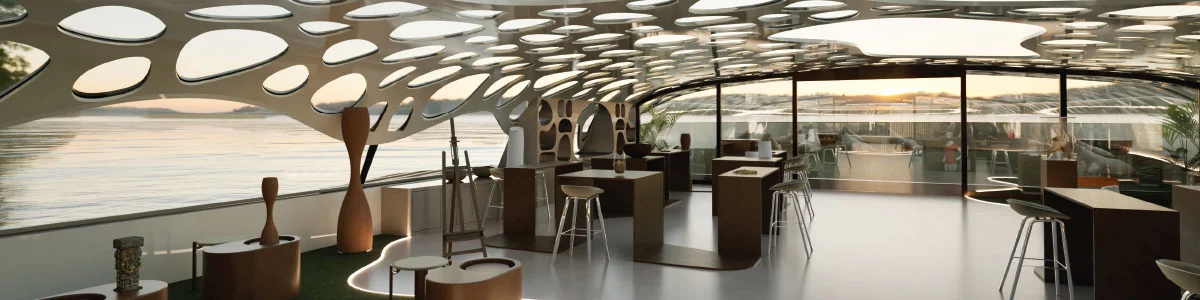
Disruptive Design: Thriving Within the Academic Communities of Italy.
Leading Italian universities push the boundaries of sustainable yacht design and naval architecture at the MUVE Design Competition in the Venice Arsenale.
This article was written by Jill Bobrow. Photography courtesy of Muve Design.
This competition, organized under the auspices of the Venice Museums Foundation (Fondazione Musei Civici di Venezia, MUVE), sought to foster a dynamic exchange of ideas in the world of nautical design and sustainability.
Carlo Nuvolari, renowned naval architect and partner in the Venice-based studio Nuvolari Lenard, as well as Scientific Director of MUVE Yacht Projects, has spearheaded this program since its inception six years ago. He coordinated the evaluation/judging committee comprised of MUVE President Mariacristina Gribaudi, Marco Bognolo, Vice President of Basic Design at Fincantieri, Fabrizio Iarrera, CEO of Silent Yachts, a producer of electric catamarans, and, yours truly.
The competition’s brief was both ambitious and inspiring, with students being asked to reimagine the relationship between water, vessel, and city. Participants were challenged to conceptualize floating spaces, sustainable watercraft, or architectural interventions that could enhance the experience of Venice’s unique maritime environment. Emphasis was placed on ecological responsibility, technical feasibility, and the poetic integration of design within the city’s historical context.
The teams from Trieste, Genoa, and Milan responded with remarkable vigor. Each university brought its own strengths to the competition: Trieste’s strong tradition in naval engineering, Genoa’s legacy as a maritime hub, and Milan’s reputation for cutting-edge design thinking. Students spent months in interdisciplinary workshops, engaging with local artisans, mentors from the design industry, and representatives of the Venice museums.
From the outset, the projects reflected a rich diversity of ideas and approaches. Teams from Trieste introduced prototype vessels powered by renewable energy, including solar-powered gondolas and modular rafts crafted from recycled materials. Genoa’s students, drawing on their city’s seafaring tradition, focused on adaptive floating platforms for public gatherings and cultural events, blending tradition with futuristic aesthetics.
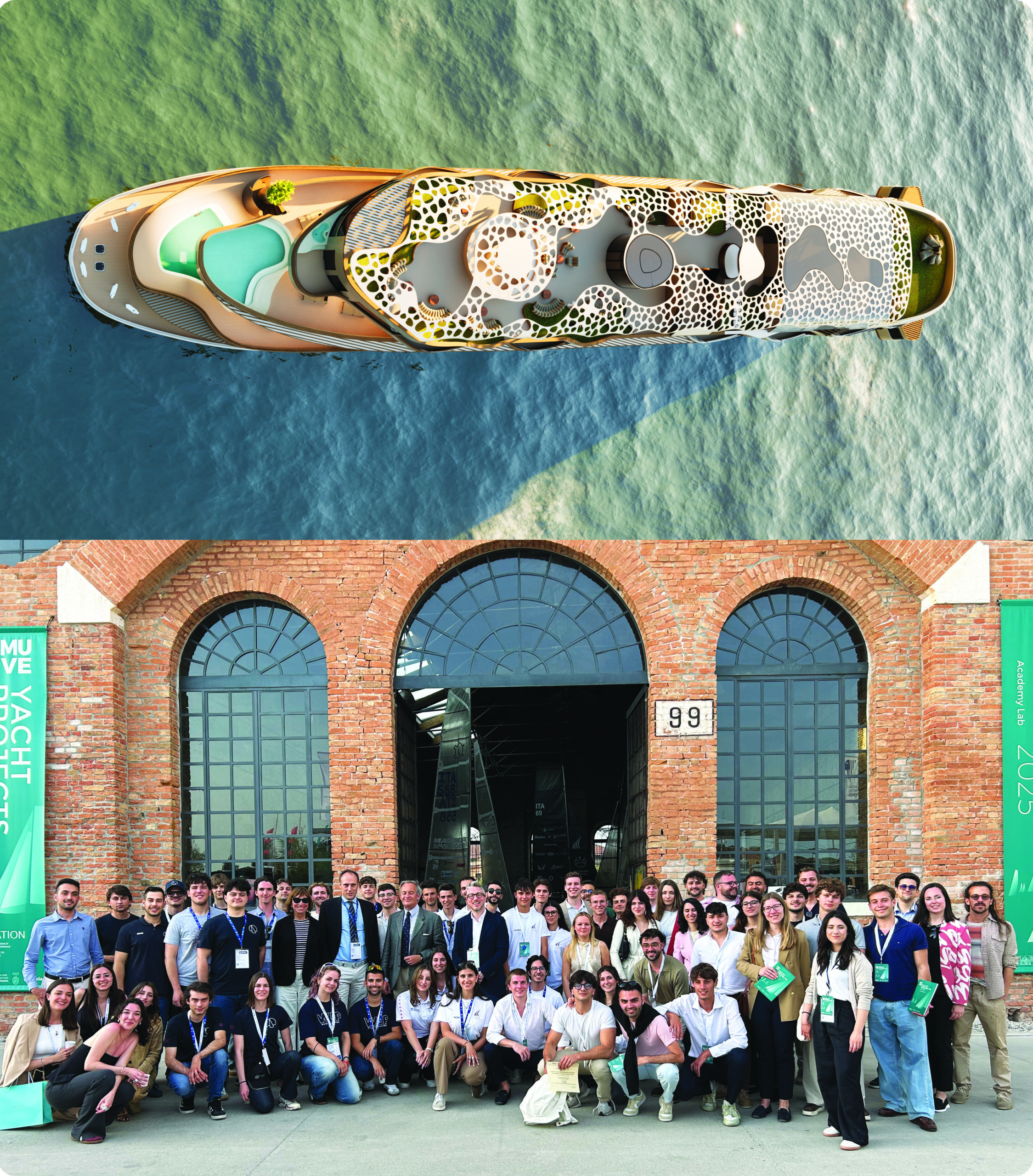
PICTURED: The strong turnout at the 2025 MUVE Design Competition and compelling results show the future of Italian design is thriving.
Milan’s teams, renowned for their flair in design and architecture, proposed innovative solutions for floating pavilions that doubled as research stations and social spaces. Their concepts often emphasized minimalism, multifunctionality, and the use of local Venetian materials adapted for aquatic environments.
Across all submissions, the importance of sustainability and resilience in the face of climate change was paramount. Many projects incorporated living plant systems, waste management innovations, and flexible construction methods that echoed the adaptive spirit of Venice itself.
In May 2025, the culmination of the MUVE Design Competition unfolded in spectacular fashion at the historic Arsenale during the Salone Nautico in Venice. This prestigious boat show, renowned for its celebration of nautical innovation, provided the perfect stage for the unveiling of the students’ work.
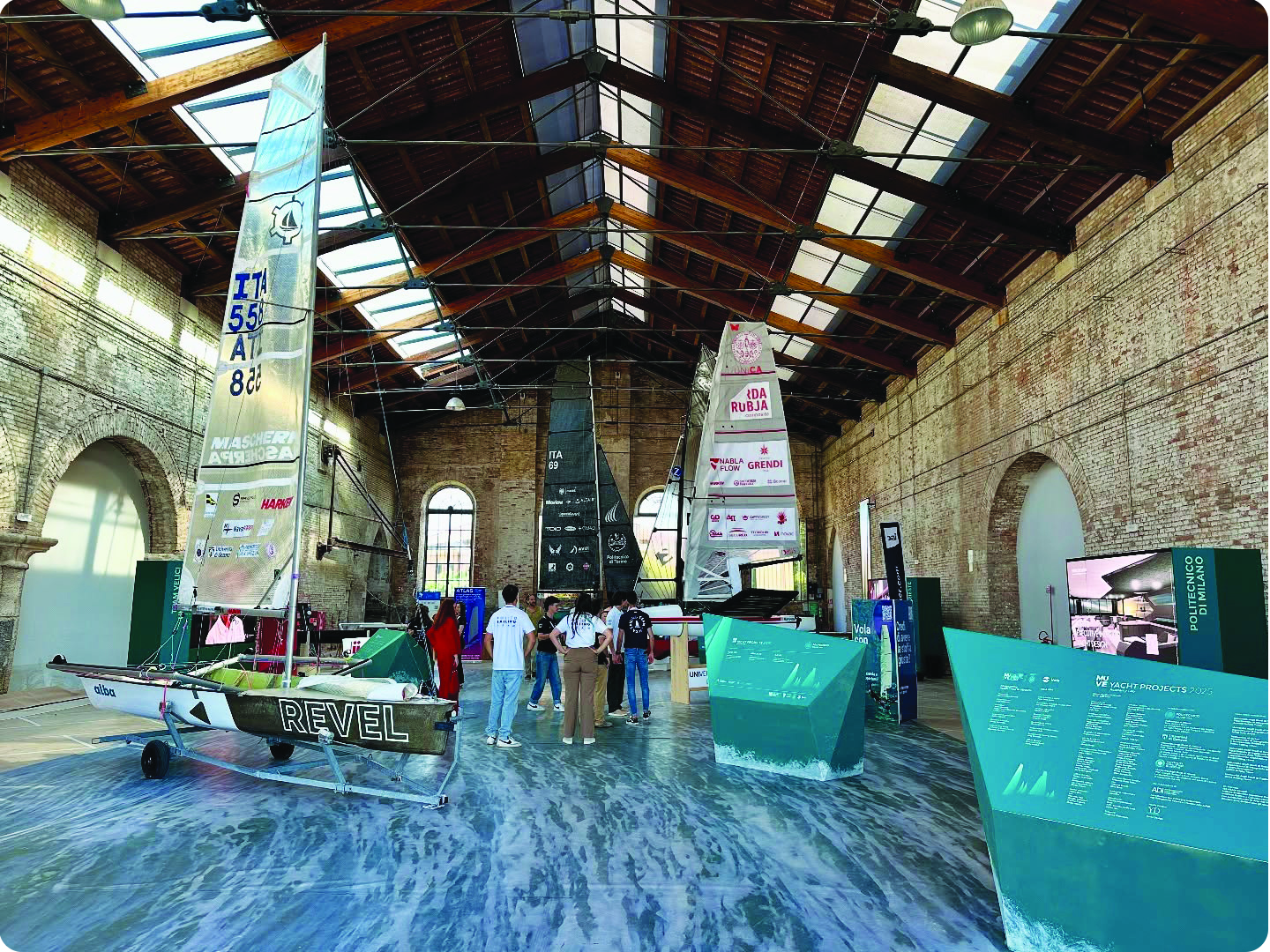
The Arsenale’s grand halls and open docks were transformed into a dynamic exhibition space, where prototypes, models, and digital presentations stood side by side. Attendees included the Mayor of Venice, renowned designers, museum curators, representatives from the maritime industry, and the general public, all eager to engage with the next generation of creative minds.
The awards ceremony was a highlight, honoring projects that excelled in innovation and feasibility. Among the winners, the Trieste team received recognition for its solar-powered vessel concept, while Genoa’s adaptive event platforms were praised for their versatility and elegance. Milan’s floating pavilion, notable for its blend of research functionality and social engagement, captured the jury’s imagination and took home the grand prize.
Beyond the trophies, the competition forged lasting collaborations and inspiration for the future.
Interested in advertising in the next issue of FRANK Magazine? CLICK HERE
Request a Copy
Share This


Latest News


