

 English
 Español
 Français
 Italiano


- Alaskan Yachts
- Azimut Yachts
- Back Cove Yachts
- Beneteau Yachts
- Benetti Superyachts
- Bertram Yachts
- Boston Whaler
- Broward Yachts
- Buddy Davis Sportfish
- Burger Yachts
- Cabo Yachts
- Catamarans
- Carver Motoryachts
- Center Console
- Chris-Craft Yachts
- Cruisers Yachts
- DeFever Trawlers
- Dufour Sailboats
- Fairline Yachts
- Feadship Yachts
- Ferretti Yachts
- Filippetti Yachts
- Formula Yachts
- Fountaine Pajot Cats
- Grady-White
- Grand Banks Trawlers
- Hargrave Yachts
- Hatteras Yachts
- Hinckley Picnic Boats
- Horizon Yachts
- Hydra-Sports
- Intrepid Boats
- Jarrett Bay Sportfish
- Jeanneau Yachts
- Kadey-Krogen Trawlers
- Lazzara Yachts
- Lekker Boats
- Luhrs Sportfish
- Marlow Yachts
- Maritimo Yachts
- Marquis Yachts
- Mazu Yachts
- McKinna Motoryachts
- Meridian Yachts
- Midnight Express
- MJM Yachts
- Mochi Craft
- Neptunus Motoryachts
- Nordhavn Trawlers
- Nordic Tugs
- Numarine Yachts
- Ocean Alexander Yachts
- Ocean King
- Offshore Yachts
- Outer Reef
- Oyster Sailing Yachts
- Pacific Mariner Yachts
- Palmer Johnson Yachts
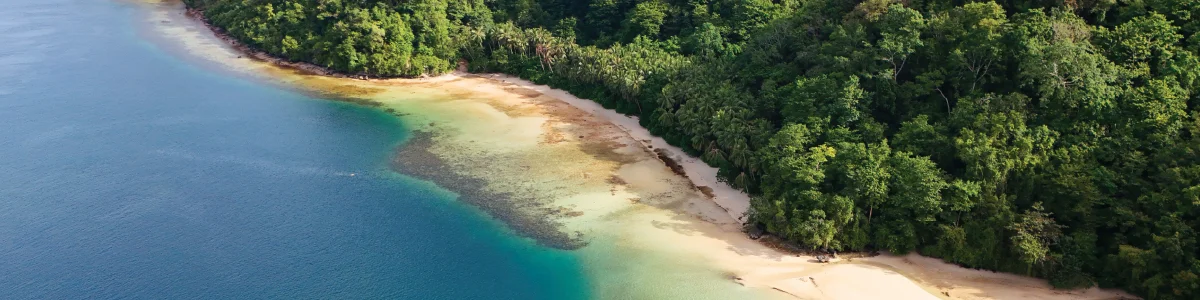
Into The Blue
The water’s remarkable visibility stretched far into the blue, over the sharp craggy reef teeming with marine life and shapely coral.
This article was written by Julia Zaltzman. Photography courtesy of Rascal Voyages.
I’d been anticipating this moment for weeks, from the second Rascal Voyages told me that meeting the Bajau divers formed an integral part of their new Indonesian charter itinerary to Wakatobi. As one of the last seafaring communities to still live on water, the Bajau have spent centuries honing their freediving skills. Studies have shown that their spleens have evolved, enabling their bodies to hold more oxygen, a wild phenomenon that inspired James Cameron when creating Avatar: The Way of the Water.
Earlier in the day we’d met with Lauda, a 50-year-old spearfisherman who had boarded our phinisi yacht Rascal to tell us about his community and village, Sampela. The Bajau teach their children to fish from the tender age of five, yet the more dangerous freediving is reserved until they’re at least 15 years old. Lauda is one of the most proficient divers in Sampela, capable of holding his breath for 15 minutes while diving to depths of 65 feet.
We had cruised overnight from Kaledupa to Hoga island in the far north of the Wakatobi region. Now, safely strapped into our scuba gear, we drifted in wait, ready to watch Lauda demonstrate his skills firsthand. As I looked skyward, I saw him don a pair of bottle-glass goggles hand-carved from mango wood, take a deep breath, and nosedive into the salty sea. Clutching his wooden speargun, he swam down to the seabed where he casually walked barefoot along the tops of the sharp, ragged coral.
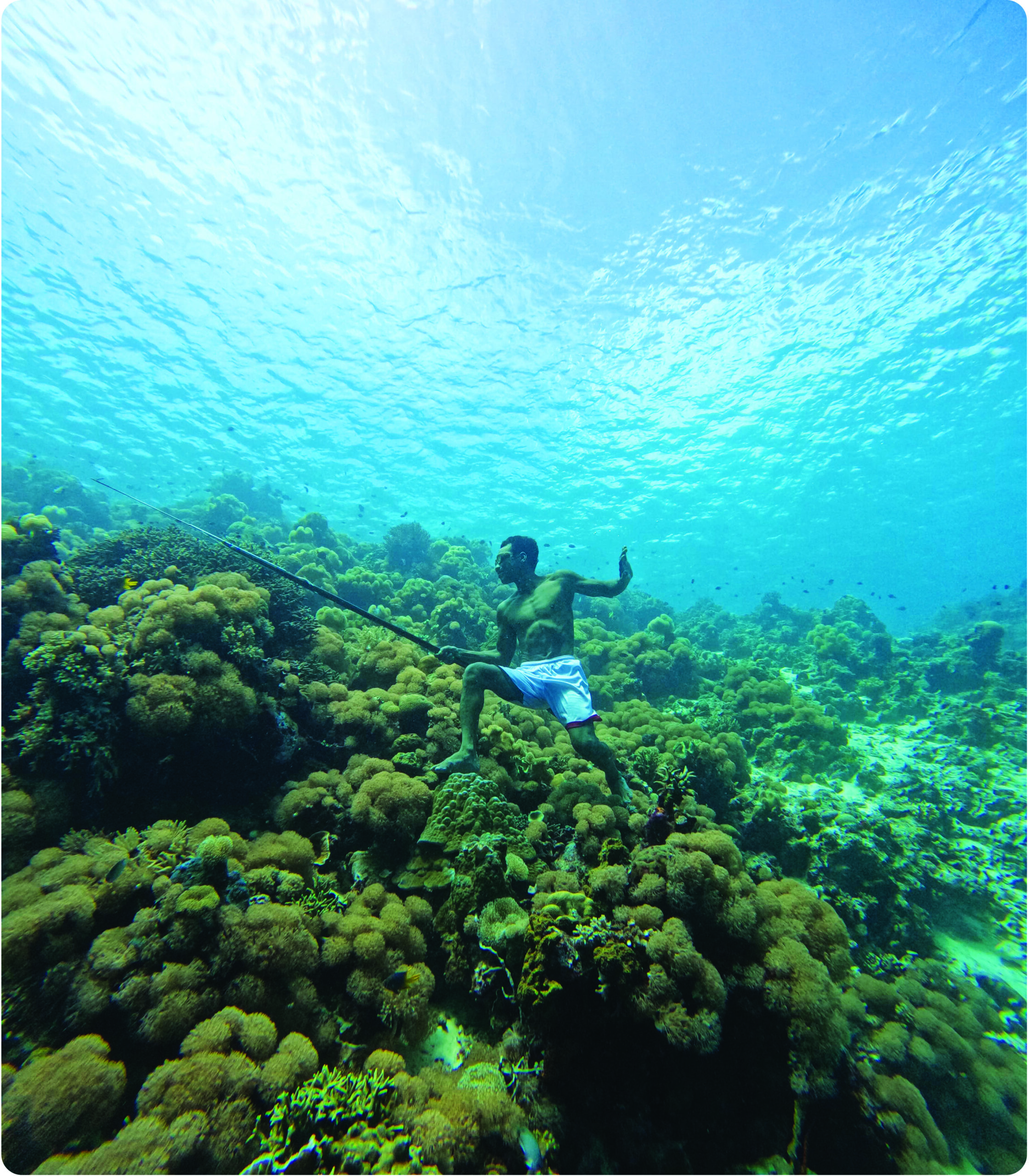
He dived over and over, holding his breath for unfathomably long spells, until under our watchful gaze he took aim, fired, and resurfaced holding a yellow angelfish he’d struck square on its side.
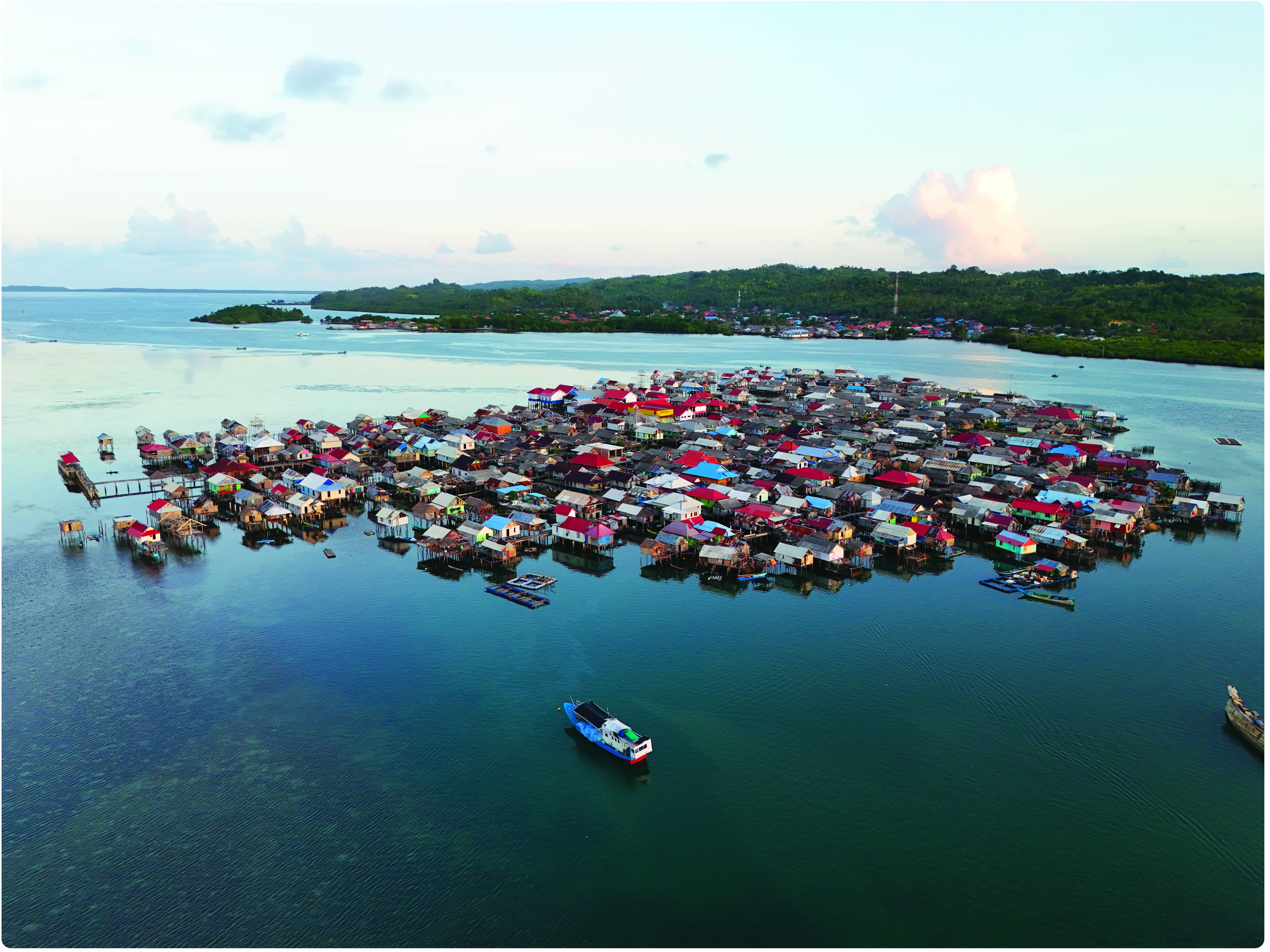
Later that day, Lauda welcomed us into his home village of Sampela, where he subsidizes his fishing income with a humble homestead—an example of the tourism his community gladly welcomes. I was led by excited children who grabbed my hand and guided me across wooden boardwalks and narrow labyrinthian planks that crisscrossed the stilted village. Women crouched on the floor preparing their evening meals as kids splashed in the shallows, their laughter ringing out across the sea as they slapped each other with dead stingray.
It took four flights, one car ride, a tender hop, and a 13-hour overnight crossing to reach Wakatobi National Park from the UK, such is the remoteness of this quiet corner of Indonesia in Southeast Sulawesi. Yet with the help of Rascal Voyages’ dedicated itinerary, it possesses everything required to become a charter mainstay for those looking for a walk on the wild side.
Interested in advertising in the next issue of FRANK Magazine? CLICK HERE
Request a Copy
Share This


Latest News


