Sport Fishing Review By Dean Travis Clarke
Grady-White 360 Express Review
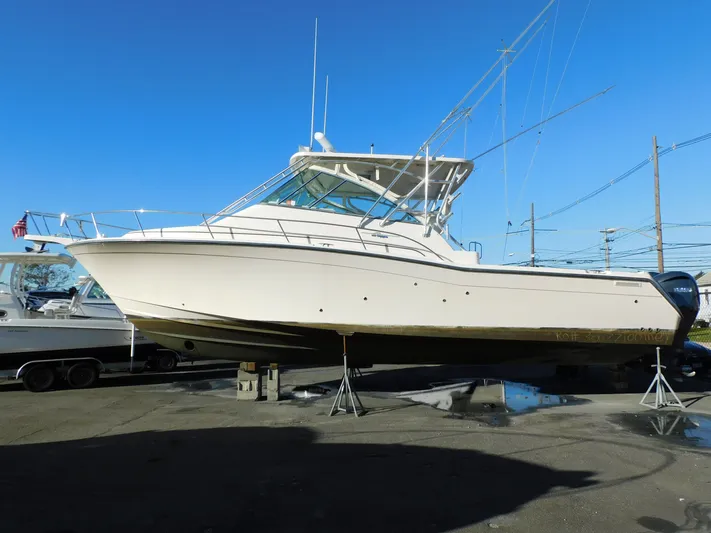
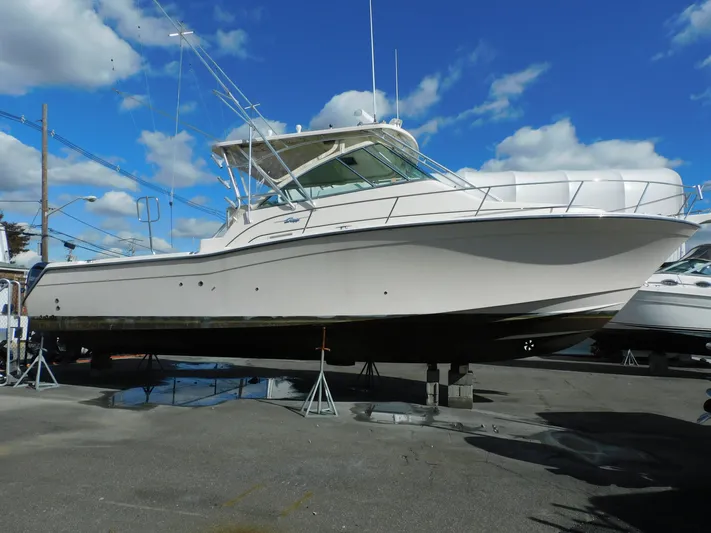
Grady introduced an even more luxurious, bigger boat with triple outboards. And it sells faster than a wahoo strike.
By Dean Travis Clarke
Updated: July 8, 2005
Grady-White knocked me down more than a few pegs with the introduction of its 33-footer several years ago. I never believed that an outboard-powered boat of that luxury, quality and expense would sell. Now it seems they can’t build them fast enough to meet demand. In what I previously would have considered reductio ad absurdum, Grady introduced an even more luxurious, bigger boat with triple outboards. It, too, sells faster than a wahoo strike. I guess the company’s second function is to keep me from getting too cocky when it comes to assessing the marketplace.
Performance The 360 is big, wide and hefty – definitely not a boat you’ll want to trailer yourself.
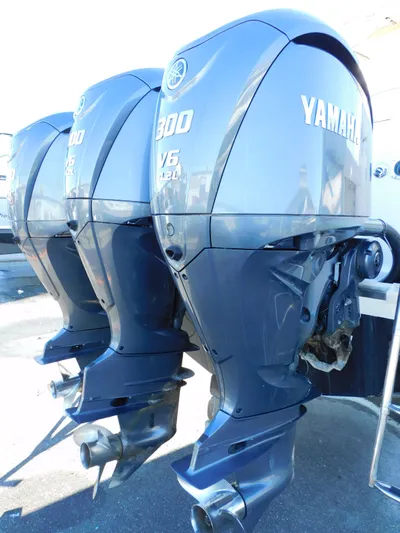
On the way out to Big Rock – almost 50 miles south of Morehead City, North Carolina – the seas were still settling after a weekend of hurricane-force winds. But no matter on which point of attack we headed, I was able to find a sweet spot where the Grady cruised along smoothly. The 360 topped out at just over 44 mph burning 20 gph per engine – 60 gph total at 6,000 rpm. I know of smaller boats with twin engines that burn almost that. Amazingly, the 360’s optimum cruising speed is a wholly respectable 31 mph at 4,500 rpm. At that speed, we used only 11 gph per engine or 33 gph total for an economy rating of 0.93 mpg.
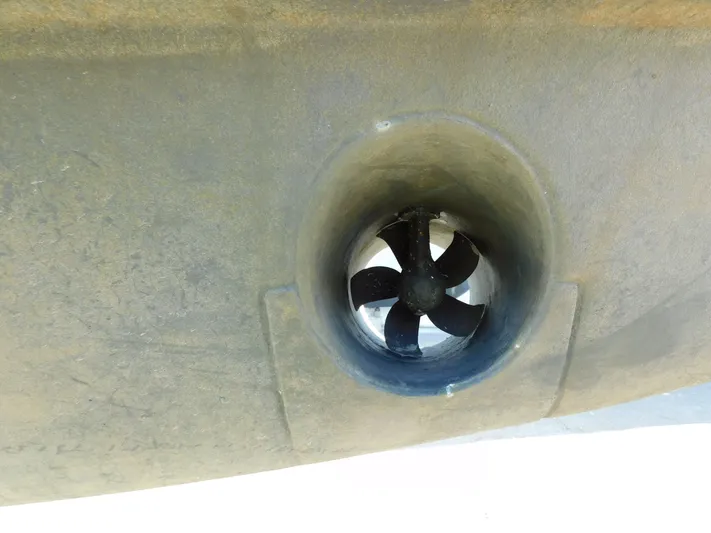
Crank the wheel hard over at speed and the 360 leans into the turn and carves a tight circle while holding everyone in his seat. I found backing down easy, especially with the standard bow thruster to help alter course. While trolling, I discovered that the 360 has a short roll moment with moderate transitions.
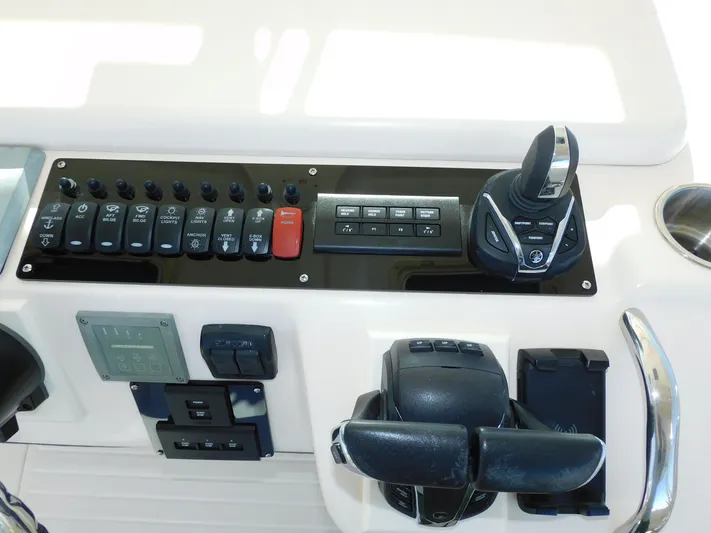
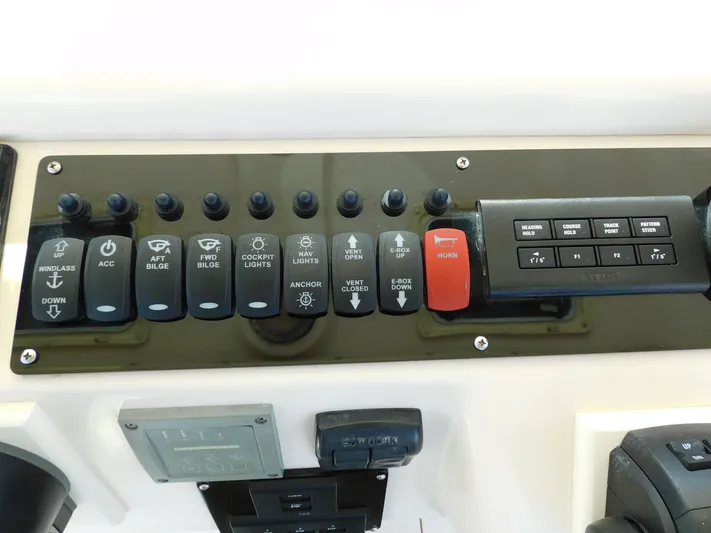
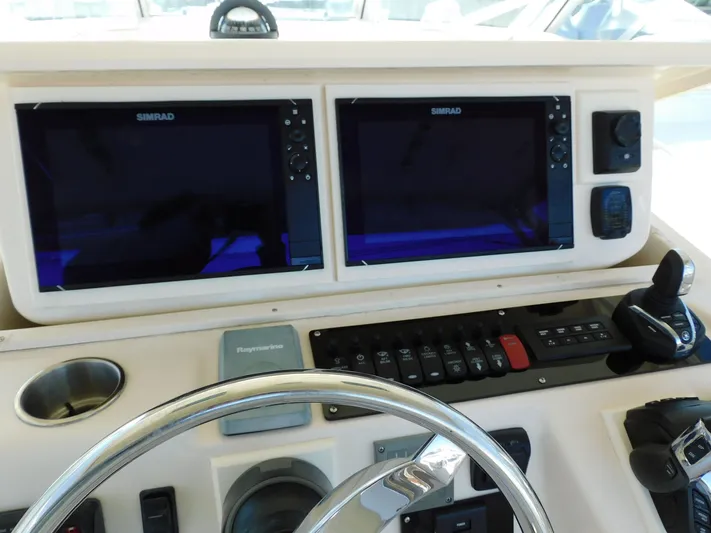
Teleflex i6000 TEC electronic controls handle three throttles with two shifters. You can configure the levers to operate in numerous ways, which sounds good, but is needlessly complex. A benefit to this system is its NMEA 2000 compatibility, which allows it to work with a number of engine companies’ products. The downside to this system? The large black boxes you need to hide away somewhere.
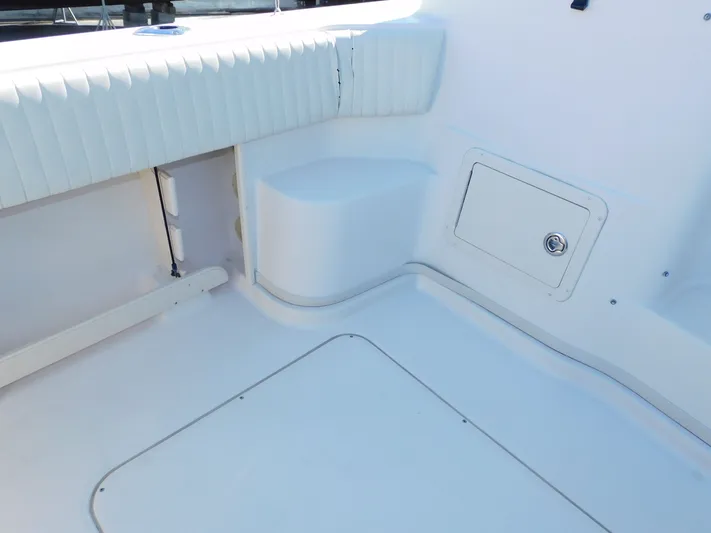
Fishing The hardtop has three single rocket-launcher holders on each leg and four horizontal rod holders up against the top. You’ll also find storage for three rods under each gunwale and two in each gunwale, and you can stow rigger balls at the aft end of the undergunwale storage.
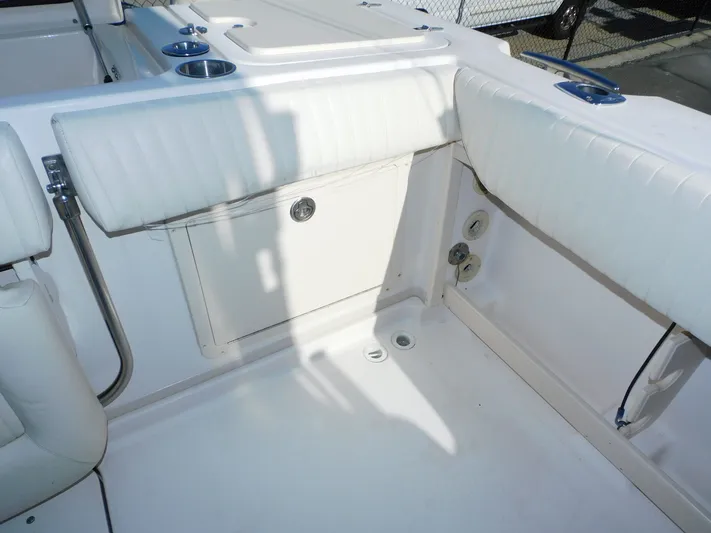
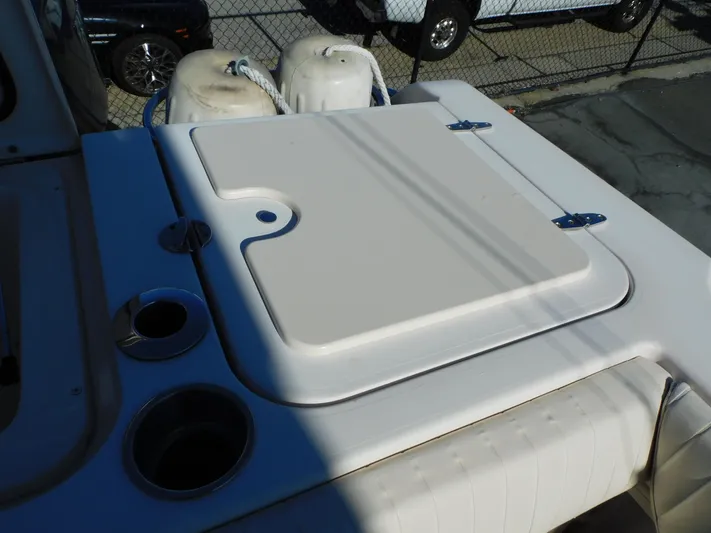
There’s a huge fish box in the transom with freezer coils wrapped around the outside and the bottom and then sealed to the box with special putty for complete insulation. We set the temperature at 24 degrees and filled the box halfway with seawater to make a brine slush – the best way to chill down fish. The refrigerator/freezer in the cockpit module has the same construction. You control both units via a digital touch pad in the companionway.
Grady installs a 48-gallon well with full-column water distribution to keep your expensive liveys hale and hearty, too.
South of Big Rock, we encountered schools of dolphin and tuna. The cockpit proved plenty large enough for three anglers and two wire men to work together, and the chill box handled a full-day’s catch with loads of room to spare. Though Grady glasses a plate into the deck to support a fighting chair, I don’t believe the cockpit will handle anything but the smallest sailfish chair. However, the Pompanette sailfish rocket launcher pod we had on our boat worked perfectly.
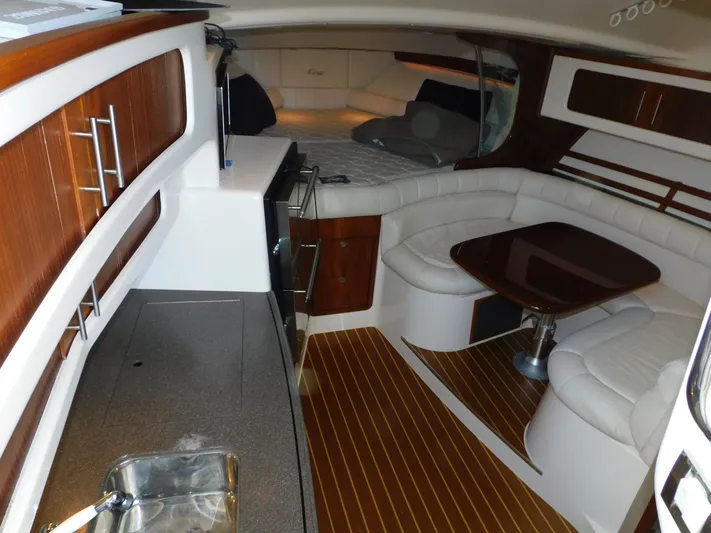
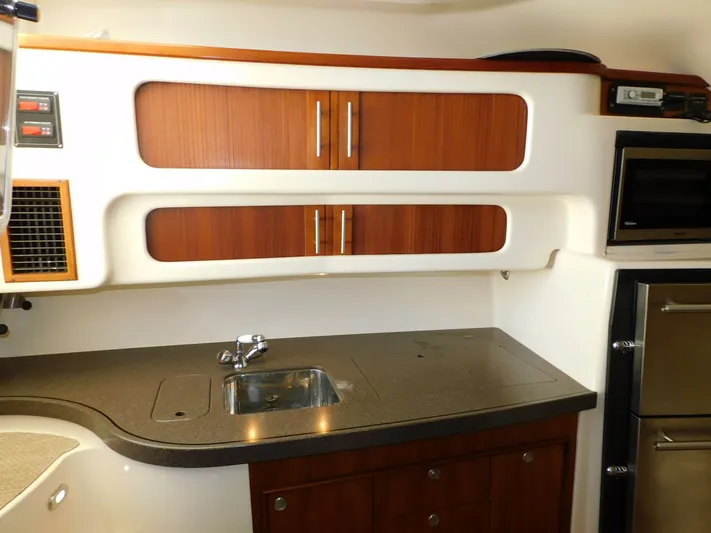
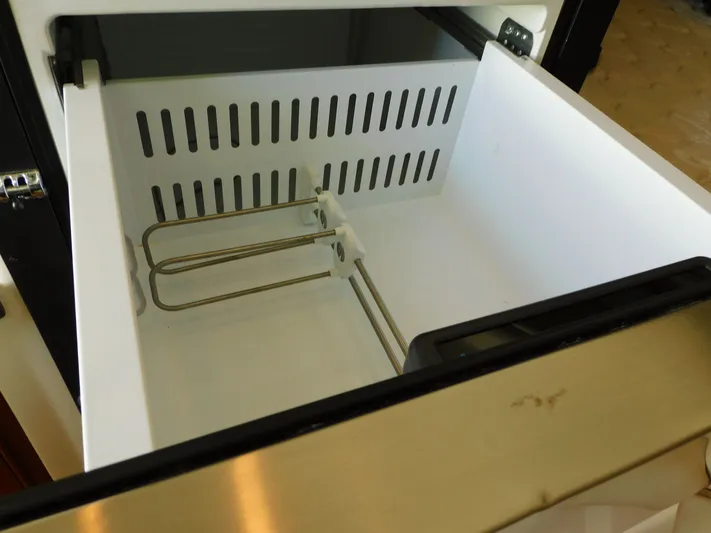
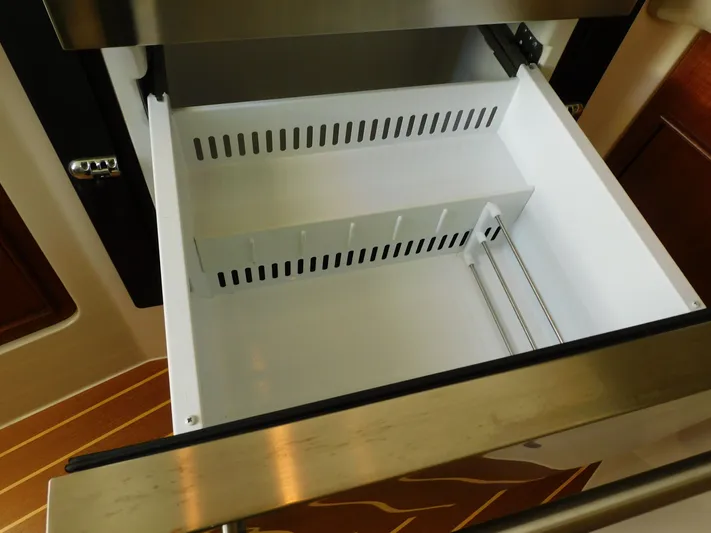
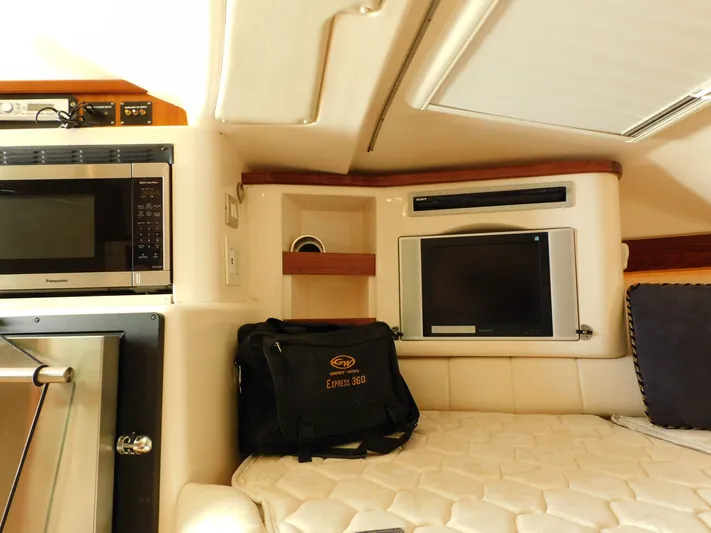
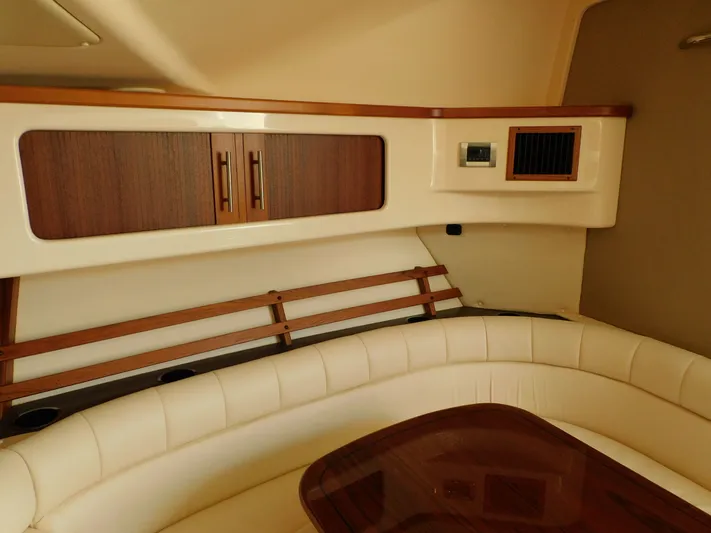
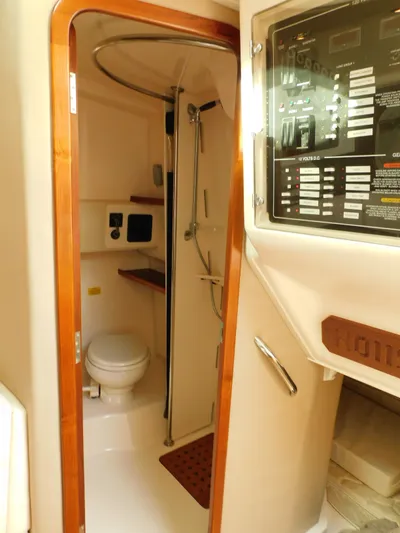
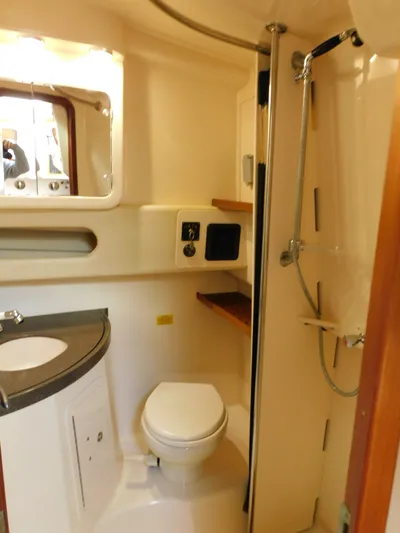
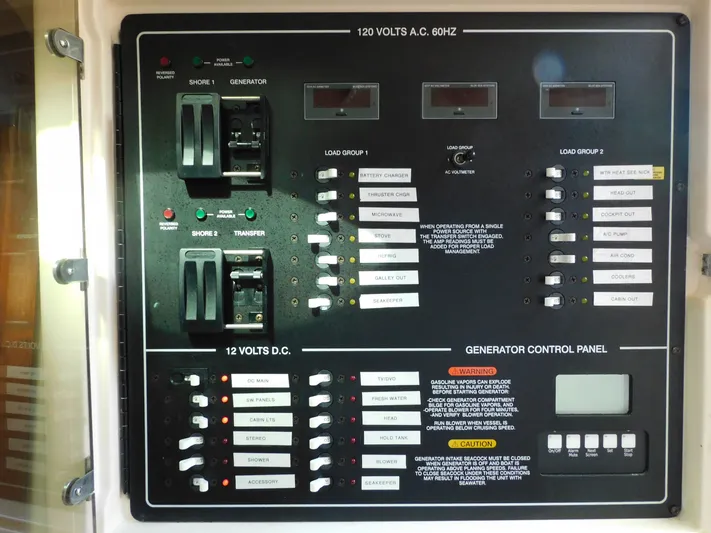
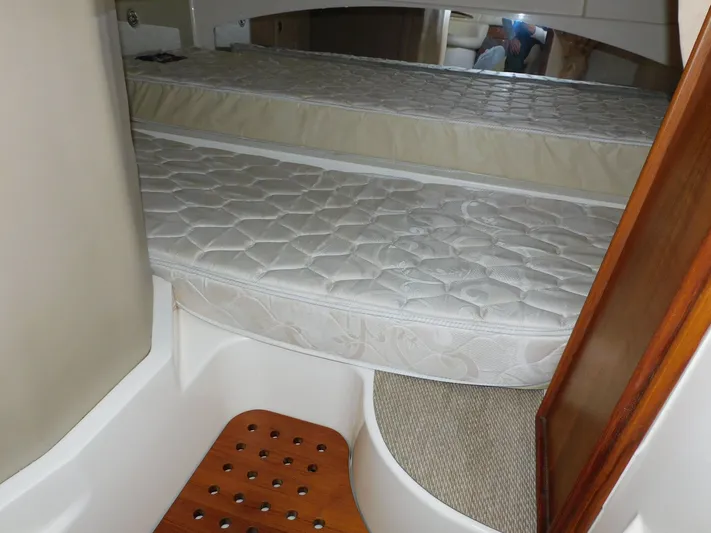
Design and Construction Here’s a clue to the thought and detail that go into every 360. The options list has two entries: Sirius satellite radio and outriggers. Absolutely everything else is standard, from the 8-kW Fischer-Panda diesel generator to the refrigerator and freezer drawers in the galley. Sport Fishing’s national sales manager, Scott Salyers, can certainly attest to the comfort of the midship berth below. Placed where a normal 36-foot express boat’s inboard engines usually live, the midberth delivered Salyers into the arms of Morpheus for the entire ride back from Big Rock in 3- to 5-foot seas. Add the spacious forward berth and the drop-down table in the salon to the mix and the 360 can sleep four adults and two children quite nicely. I also found the head to be reality based, with room to move – and sit – without feeling “wedged in.”
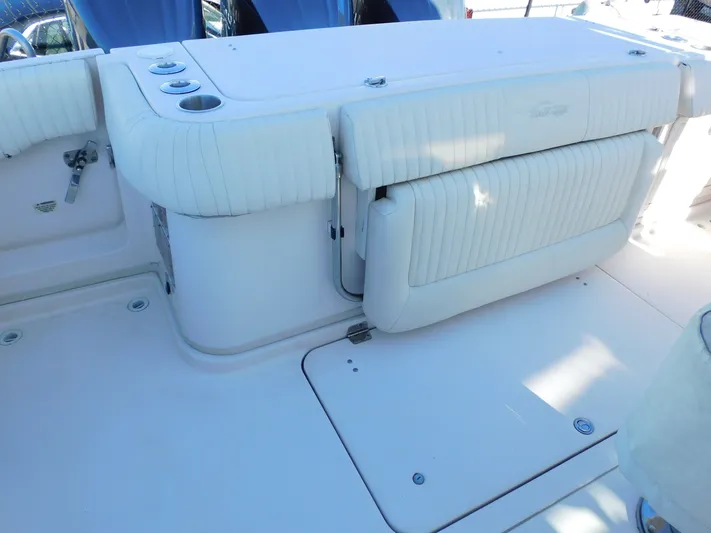
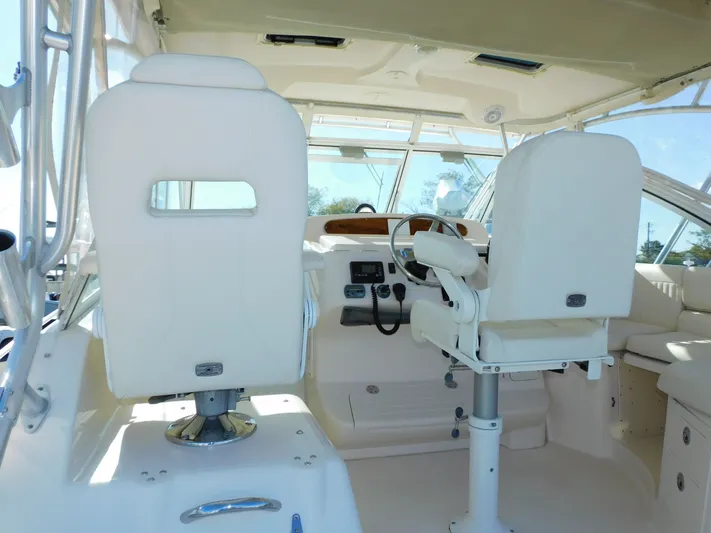
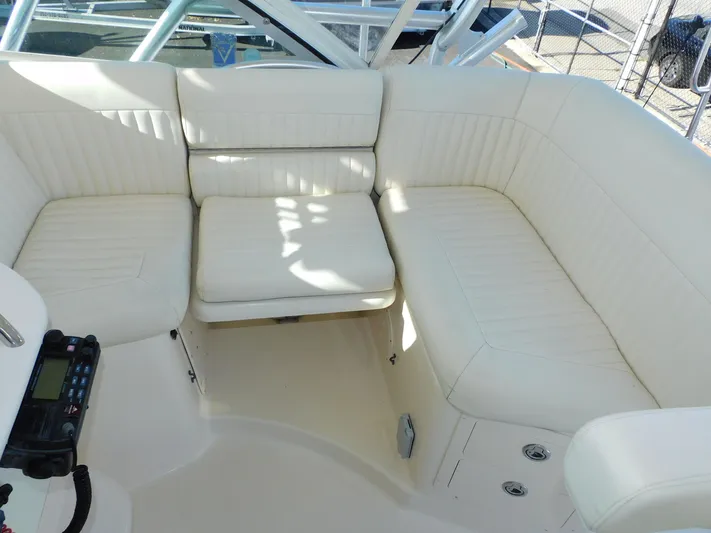
The helm couldn’t be more comfortable. Every nuance of ergonomics has been considered and addressed, from the deluxe helm chair capable of seemingly infinite adjustability to guest settees that serve equally well whether the passenger faces forward or aft.
The construction of Grady’s 360 mirrors the successful 33 with hand-laid fiberglass SeaV2 hull, fiberglass Prisma stringers and quality chrome-stainless hardware. Overall, I could easily triple the length of this column and not cover all the impressive features aboard the Grady 360. So be sure to check out this history-making boat at your dealer or the next boat show.
Power & Motoryacht Review
August 1, 2005
In the spring of 2001, I spent two days fishing and testing the Grady-White 330 Express on a tempestuous ocean off Ocracoke, North Carolina. Grady’s then-flagship boat ran impressively in the slop, and I was even more impressed that we were able to comfortably fish in the six- to eight-foot-plus seas. Shortly after I returned, a PMY reader wrote and asked me what I thought about the 330. I wrote him back my thoughts, and he eventually bought one. Moreover, he came from my neck of the woods in Long Island, New York, and invited me out fishing. (You don’t have to ask me twice.) I’ve crewed on Blinky II ever since.
So having spent four years and 500-plus hours onboard the 330, I felt I had the background to see what her big sister, the 360 Express, had to offer when I ran her out Morehead City, North Carolina, last May.
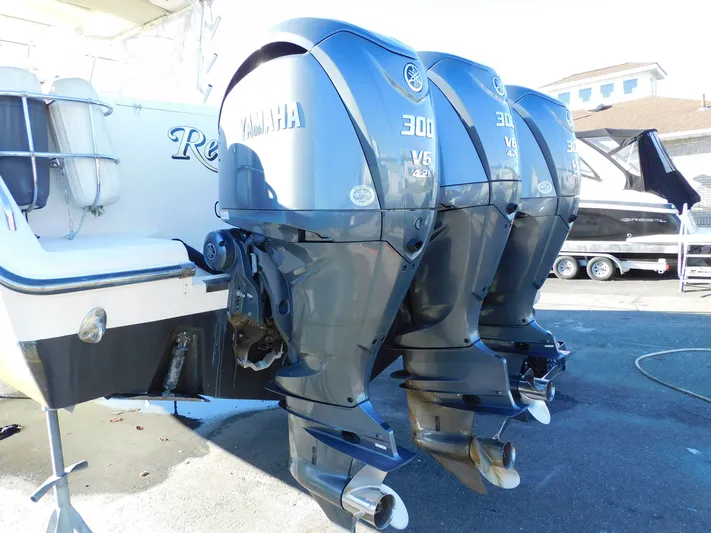
A quick two-foot ocean chop greeted her five-man fishing crew and me as we exited the inlet on our way to capitalize on a reported hot tuna bite some 40-plus miles offshore. Grady-White’s Joey Weller firewalled the two single-lever Teleflex electronic controls, bringing the standard triple 250-hp Yamaha four-strokes to 4500 rpm, then tabbed down the 360’s nose, allowing the fine entry to dispatch the chop with authority. (During testing on flat water later in the day, my test boat made an average cruise speed of about 32.5 mph while burning 31.5 gph, which equates to 1.03 mpg based on her 370-gallon fuel capacity. Anytime you can get a one-to-one ratio (one gallon burned for one mile traveled) or better on the water, it’s a great thing. At WOT, the 360 hit an average of 45.5 mph while burning 61.5 gph and earning 0.74 mpg.)
Such performance can be attributed, in part, to four-stroke power, but also to the 360’s C. Raymond Hunt-designed SeaV2 hull, which has a continually varying deadrise from bow to stern, a sharp entry, and modified aft sections that provide lift and allow this boat to get up and go.
The 360’s hull is also built tough, comprised of solid hand-laid fiberglass below the waterline and Baltek balsa core in the hull sides, which adds rigidity but not excessive weight.
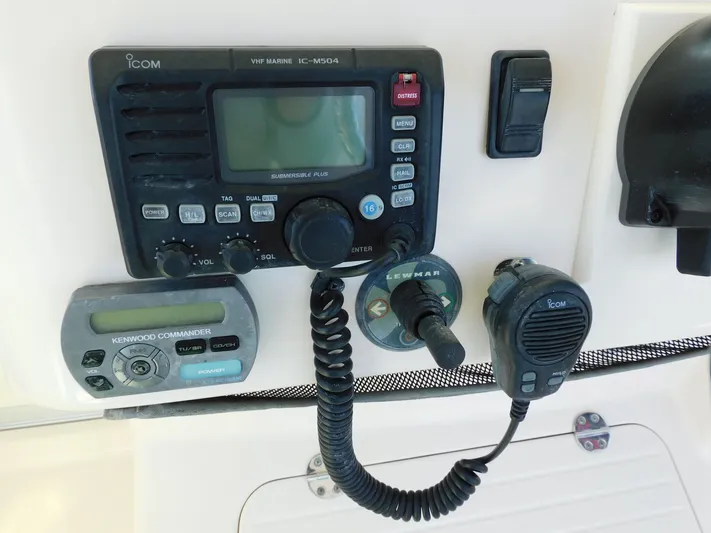
While our solid boat boogied offshore, I got caught up in those single-lever Teleflex controls and how two of them managed three engines, particularly pondering their effectiveness at slow speeds and in close quarters. It turns out the controls’ computer detects when the levers are opposed a certain number of degrees from each other at slow speeds and automatically cuts out the center engine, which makes for easier maneuvering in close quarters. With plenty of horsepower, she handles just like an inboard and spins easily by opposing the controls. Her Teleflex SeaStar hydraulic power-assist steering is equally smooth, letting her turn on the proverbial dime at cruise speed. The optional Lewmar bow thruster should only be needed on really windy days, in big currents, or both.
By the time we reached the fishing grounds, the wind had diminished to nil, and the ocean was checkerboard-flat. It was now time to fish.
We deployed the optional 24-foot Lee outriggers, using the four standard in-gunwale rod holders to set up two flat lines and two short-‘rigger lines with skirted ballyhoo baits and set the long ‘rigger baits into the lowest rocket launchers on the side of the 360’s hardtop piping. (There are three per side, and both the hardtop and rocket launchers are standard.) The ‘riggers and flat lines made for an attractive six-line spread, enhanced by our ability to cut the outboard motors and troll on just the center engine. The advantage? Consistently clean water where your baits are, making it much easier to see fish coming up (and a 5-gph fuel burn didn’t hurt). Our test boat was also fitted with an optional Release bolster in the center of the 96-square-foot cockpit, which allows for running a way-way-back (WWB) bait down the center or a place for pitch baits.
The lines were out, and within five minutes the left flat line started screaming. In short order PMY assistant editor Jeff Moser had his first 40-pound-class yellowfin tuna. We then placed it into the standard digitally climate-controlled, 269-quart, in-transom fishbox, a Grady-White first and a big improvement over the 360’s little sister, which requires a lot of ice in her insulated transom fishbox to keep fish cool. I remember nights on the 330 when we had tuna bags and extra coolers onboard to hold fish. The new design doesn’t require you to carry superfluous coolers or bags and therefore saves valuable cockpit space. All we had to do was put in some salt water from the standard washdown and set the temperature on the control panel just inside the companionway steps in the saloon. We were able to keep our catch, which also included a couple of nice dolphin and a wahoo, as fresh as when we caught them.
With the fishing-friendly open layout and an abundance of standard angling amenities, the 360 is a sportfisherman first and foremost, but she also features a comfortable, open saloon/cabin/galley offering 6’8″ headroom, complete with a forward berth that is more than six feet long and six feet wide, an aft berth that’s the length of a full and the width of a queen, and a port-side dinette table that can convert to a double berth for kids. The below-decks area is accented with a warm teak interior and teak-and-holly sole, both standard.
Add to this the fully equipped galley (see specifications), 16,000 Btus of standard air conditioning, and a generously sized shower with 6’6″ headroom, and nights spent either at the canyon with your buddies or on the hook with your family should feel just like home. Except that you can—and will—take this home fishing.
So if anyone out there is looking at the 360 Express and needs a deckhand, I’m available.
The Boat
Standard Equipment
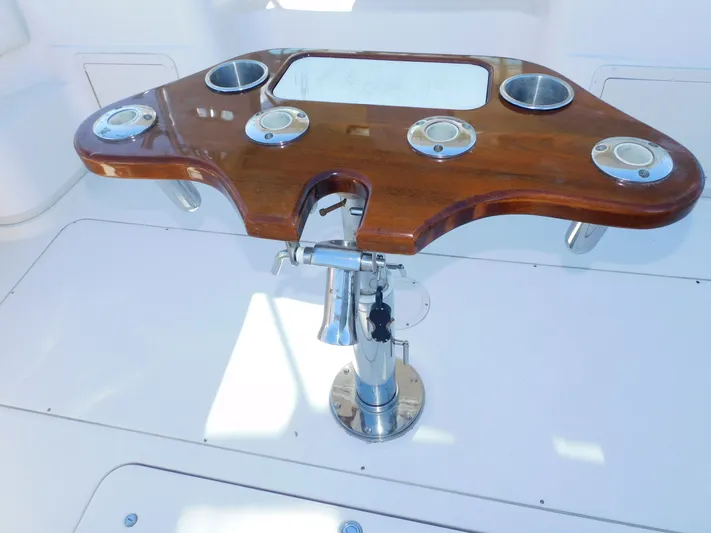
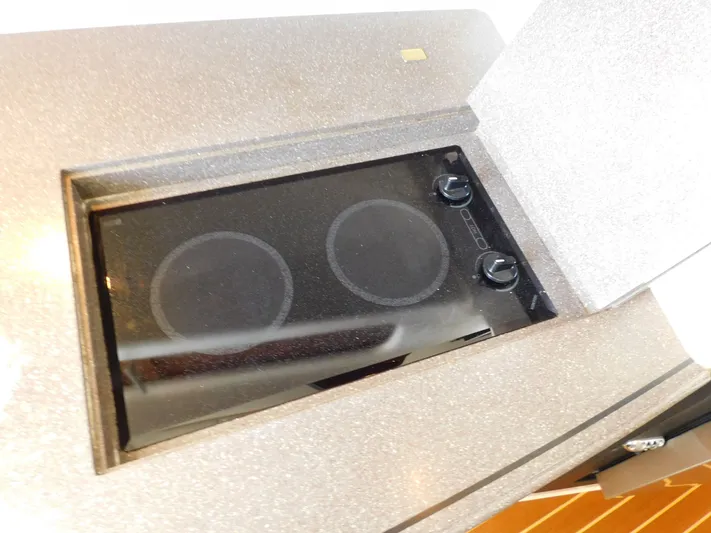
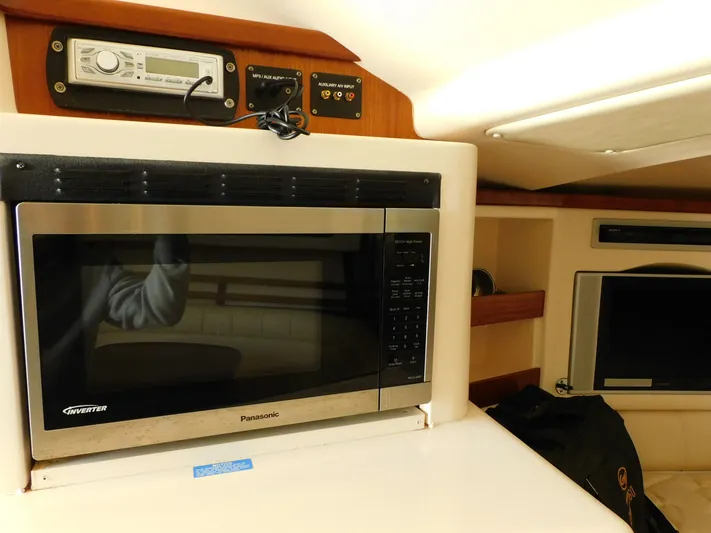
269-qt. refrigerated aft fishbox; 55-qt. refrigerated cockpit cooler; 48-gal. livewell; rigging station w/ freshwater sink; 4/rod holders; under-gunwale rod stowage; hardtop w/6 rocket launchers; 8-kW Fischer Panda diesel genset; 10/cupholders; 6-hp Lewmar bow thruster; VacuFlush MSD; Corian countertops; teak-and-holly sole in saloon/cabin/galley; Sharp 15″ flat-panel TV, DVD/CD player; U-line refrigerator, ice maker, freezer; Samsung microwave; 16,000-Btu Cruisair A/C; Bennett trim tabs; high-gloss teak dinette table
 English
 Español
 Français
 Italiano







































 APPLY FOR A LOAN
 GET AN INSURANCE QUOTE
 TRADE YOUR YACHT
 PREPARE DOCUMENTATION